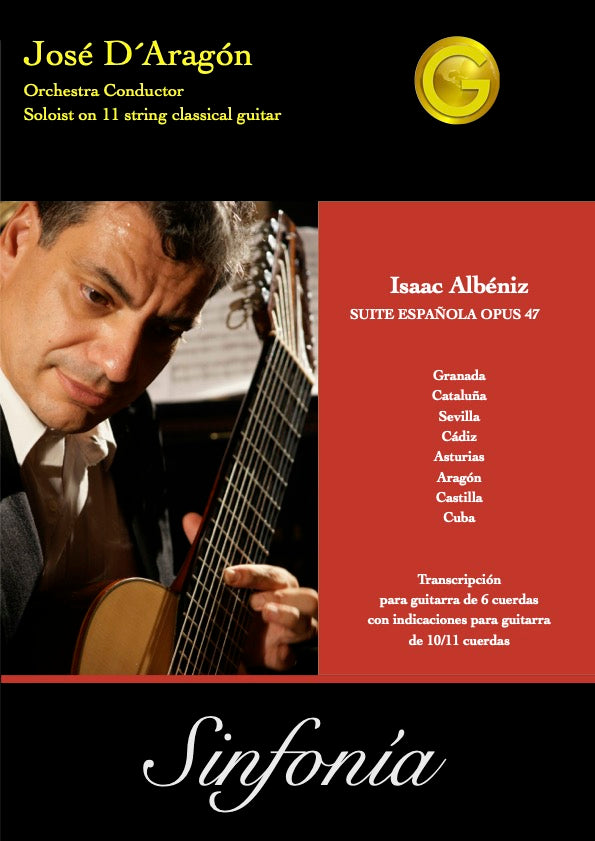
Albéniz Isaac - Suite Espanola- José D´Aragon
Albéniz Isaac - Suite Espanola- José D´Aragon
Isaac Albéniz’s Suite española, Op. 47 is one of the most celebrated and vibrant masterworks of Spanish classical music. Originally composed for solo piano starting around 1886, it was written in honor of the Queen of Spain.
Each piece in the suite acts as a musical postcard, depicting different regions, cities, and traditional dance styles of Spain (including Cuba, which was a Spanish province at the time).
The Eight Movements
In each piece, Albéniz combines the name of the region with its traditional musical style or dance form in parentheses:
-
Granada (Serenata) – A gentle, romantic serenade mimicking the plucking of a guitar.
-
Cataluña (Curranda) – A brisk dance from Catalonia, the composer’s home region.
-
Sevilla (Sevillanas) – A lively, spirited dance representing the festive atmosphere of Seville.
-
Cádiz (Canción) – A lyrical, song-like piece with a rhythmic, walking pulse.
-
Asturias (Leyenda) – The most famous piece of the suite. Meaning "Legend," it features a dramatic, driving rhythm that builds into an unforgettable flamenco-inspired melody.
-
Aragón (Fantasía) – A high-energy fantasy piece modeled after the traditional, fast-paced jota dance.
-
Castilla (Seguidillas) – A rhythmic, complex Castilian dance utilizing shifting accents.
-
Cuba (Nocturno) – A sensual, flowing piece written in the style of a habanera, celebrating the tropical rhythms of Spain's former colony.
From Piano to Guitar
Fun Fact: Though Albéniz wrote this suite entirely for the piano, it is actually more famous today as a staple of the classical guitar repertoire.
Product features
Product features
Materials and care
Materials and care
Merchandising tips
Merchandising tips
Share